
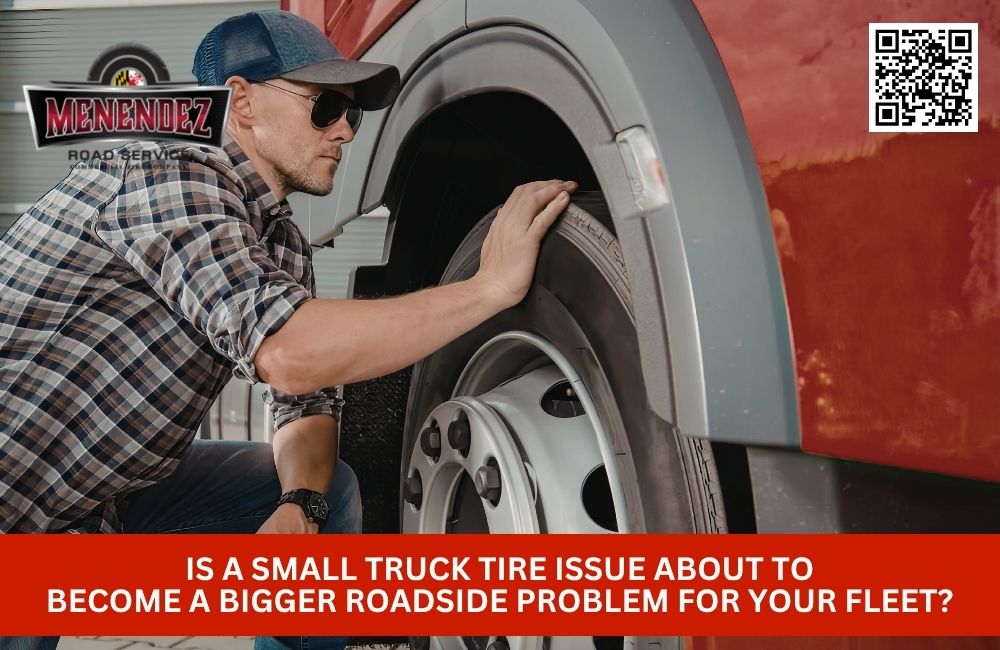
Fleet problems do not always begin with a major breakdown. Most of the time, they begin with something that seems small enough to manage for one more trip. A tire needs air again. One truck starts showing uneven tread. A driver mentions the ride feels rough, but the route still gets finished. Because the unit is still moving, it is easy to treat the issue like something that can wait.
That is exactly how bigger roadside delays start. In Bowie, MD, where fleet schedules often depend on tight timing and steady route flow, a small tire issue can quickly grow into a much larger disruption. One delayed truck can affect dispatch decisions, delivery windows, customer expectations, and the rest of the day’s workload. What looked like a minor maintenance concern can suddenly turn into a need for 𝐓𝐫𝐮𝐜𝐤 𝐑𝐨𝐚𝐝 𝐒𝐞𝐫𝐯𝐢𝐜𝐞 at the worst possible time.
The good news is that most growing tire problems leave clues before they become full roadside emergencies. When fleet drivers and managers catch those clues early, they usually save far more time than if they wait for the route to force the issue. This article explains how to tell when a small truck tire issue may be turning into a bigger roadside problem for your fleet, what warning signs matter most, and how early action can protect your schedule.
Why Small Tire Problems Become Big Fleet Problems
A tire issue on one truck rarely stays limited to one truck for long. That is the difference between a fleet problem and a single-vehicle problem.
One delay can affect the whole operation
When one truck falls behind, the rest of the day often shifts with it. Dispatch may need to adjust routes. Another driver may need to cover more stops. Customers may need updates. A delay that started with one tire can quickly affect several moving parts of the business.
Tire trouble often grows under pressure
A truck might look fine in the yard, but the route changes everything. Once weight, mileage, heat, and road conditions start building, a small issue can turn serious much faster than expected. That is why early 𝐓𝐫𝐮𝐜𝐤 𝐑𝐞𝐩𝐚𝐢𝐫 often saves more time than waiting until the truck is forced off the road.
The First Sign: A Tire That Keeps Losing Air
One of the most common early warnings is repeated air loss.
Why this matters
If the same tire keeps needing air, the problem is already active. It may be a puncture, a leaking valve, a rim issue, or another defect that will not fix itself. Adding air may keep the truck moving for a little while, but it is usually only buying time.
Why fleets should not ignore it
The more often a tire loses pressure, the more likely it is to create a route interruption later. A truck that needs constant air checks is already losing efficiency, even before it stops completely. If the issue is left too long, the driver may end up needing 𝐑𝐨𝐚𝐝𝐬𝐢𝐝𝐞 𝐓𝐫𝐮𝐜𝐤 𝐑𝐞𝐩𝐚𝐢𝐫 𝐍𝐞𝐚𝐫 𝐌𝐞 in the middle of a much busier and more stressful part of the day.
The Second Sign: Uneven Tread Wear
Uneven tread is one of the clearest signs that a “small” tire issue may already be getting bigger.
What uneven wear usually points to
Uneven wear often suggests poor alignment, inflation imbalance, suspension trouble, or weight distribution problems. In other words, the tire may be showing the symptom of a deeper problem.
Why it affects fleet performance
A truck with uneven tread may still stay on the road, but it is already becoming less dependable. The driver may begin to feel more vibration, less smooth handling, or weaker road grip. Even before the tire fails, the unit may already be costing the fleet extra time and attention.
The Third Sign: The Truck Feels Different on the Road
Drivers often feel the problem before they fully see it.
Rough handling and vibration matter
If the truck begins pulling, vibrating, or feeling unstable at certain speeds, the tire condition may already be affecting how the unit performs. These changes should not be treated as normal wear and tear if they are new or becoming more noticeable.
Why this is more than a comfort issue
A truck that no longer feels right usually forces the driver to compensate. That may mean slowing down, stopping more often, or staying extra cautious. Those small adjustments may not look dramatic, but across a full route they can cost real time. If ignored, they can eventually become the reason the driver needs 𝐓𝐫𝐮𝐜𝐤 𝐑𝐨𝐚𝐝 𝐒𝐞𝐫𝐯𝐢𝐜𝐞 𝐍𝐞𝐚𝐫𝐛𝐲 instead of finishing the route.
The Fourth Sign: Visible Sidewall Damage
Some warnings are impossible to miss once drivers know what they are looking for.
What to watch for
Cuts, cracks, bulges, bubbles, or unusual tire shape should always be taken seriously. These are not cosmetic details. They can point to structural weakness in the tire.
Why this becomes urgent fast
A sidewall problem can go from “looks questionable” to “cannot safely continue” very quickly, especially once the truck is loaded and under route pressure. A fleet that delays action on visible sidewall damage is usually taking a much bigger gamble than it realizes.
The Fifth Sign: The Same Unit Keeps Having Tire Trouble
Patterns matter in fleet operations.
Why repeated issues are a warning sign
If the same truck keeps needing air, showing rough wear, or creating driver complaints, the problem is no longer random. At that point, the issue is part of a pattern, and patterns usually get more expensive when ignored.
Why this hurts fleets more than individual drivers
For a fleet, repeat trouble on one unit means more than repeated repair needs. It means unstable planning. The truck becomes less trustworthy, the schedule becomes harder to manage, and dispatch may have to build around a unit that keeps threatening to fall behind.
How Small Problems Quietly Slow Down Routes
A tire problem does not need to become a blowout to hurt productivity.
Extra checks take time
If drivers keep stopping to inspect a tire, recheck pressure, or decide whether the truck can continue, those minutes add up across the day. The route may still get finished, but it may take longer and create more stress than it should.
Driver confidence changes
When a driver no longer trusts a tire, the whole route feels different. The truck may still be moving, but the pace, confidence, and consistency are already being affected. That is often the stage where fast 𝐌𝐨𝐛𝐢𝐥𝐞 𝐓𝐫𝐮𝐜𝐤 𝐑𝐞𝐩𝐚𝐢𝐫 can prevent a much bigger interruption later.
How to Catch the Problem Before It Gets Worse
The best way to keep a small tire issue from growing is to respond while the fleet still has control over the timing.
Strengthen pre-trip inspections
A fast walk-around is better than nothing, but fleets benefit much more from inspections that pay attention to pressure changes, visible damage, uneven tread, and anything that looks different from the previous route.
Recheck during routine stops
Fuel stops, loading stops, and delivery stops are good opportunities to catch developing trouble. A tire that looked acceptable at the start of the day may show more obvious problems later.
Listen to driver feedback early
Drivers often know when a truck feels different. If they report vibration, repeated air loss, or a tire that keeps drawing attention, that report should be taken seriously before the unit becomes a roadside problem.
When Fleets Should Stop Waiting and Act
Some tire issues should not be pushed into the next shift.
Act when pressure loss becomes repeat pressure loss
One pressure concern may be manageable. A repeated pressure concern usually means the issue is growing.
Act when the truck is no longer driving normally
If the driver feels instability, vibration, or poor handling, the problem has already moved beyond a harmless inconvenience.
Act when visible damage is present
Bulges, deep cracks, cuts, or serious wear patterns are not signs to keep postponing service.
Act before the next load increases the risk
A small tire issue often becomes bigger the moment weight and heat are added. Handling the problem before the next route is usually the smarter fleet decision.
Why Fast Roadside Support Matters
Even strong inspection habits cannot prevent every roadside problem. That is why dependable support still matters.
Quick response protects the schedule
The sooner help gets to the truck, the better the chance of limiting how far the delay spreads through the day.
Mobile service keeps the solution close
A truck with an active tire issue is not always in a good position to continue toward a distant 𝐓𝐫𝐮𝐜𝐤 𝐑𝐞𝐩𝐚𝐢𝐫 𝐒𝐡𝐨𝐩. In many cases, 𝐌𝐨𝐛𝐢𝐥𝐞 𝐓𝐫𝐮𝐜𝐤 𝐑𝐞𝐩𝐚𝐢𝐫 is the more practical option because it brings help directly to the vehicle.
Better preparation reduces panic
When fleets already know who to call, they lose less time deciding what to do under pressure.
Practical Fleet Habits That Prevent Bigger Tire Delays
Keep a close eye on repeat issues
If one truck keeps showing tire-related warning signs, do not let that become normal.
Treat tire concerns as route concerns
A tire issue is not only maintenance. In fleet work, it is a scheduling issue too.
Build better communication between drivers and dispatch
The earlier dispatch knows there is a concern, the more options there are to protect the day.
Save a trusted roadside contact in advance
The best time to prepare for a breakdown is before one happens. Having dependable 𝐓𝐫𝐮𝐤 𝐑𝐨𝐚𝐝 𝐒𝐞𝐫𝐯𝐢𝐜𝐞 ready can save critical minutes when a route is at risk.
Contact Information
Menendez Roadservice LLC – Commercial Truck Tire Service
Address: 8174 Maple Ave, Bowie, MD 20720, United States
Phone: +1 (240) 601-9664
Conclusion
Yes, a small truck tire issue can absolutely become a much bigger roadside problem for your fleet. Repeated air loss, uneven tread wear, rough handling, visible sidewall damage, and repeated trouble on the same unit are all signs that the problem is already growing. What looks manageable in the moment often becomes much more disruptive once the truck is loaded and the route is underway.
The smartest fleet response is to take those small warnings seriously before they turn into expensive downtime. With stronger inspections, faster decisions, and dependable help like 𝐓𝐫𝐮𝐤 𝐑𝐞𝐩𝐚𝐢𝐫, 𝐌𝐨𝐛𝐢𝐥𝐞 𝐓𝐫𝐮𝐤 𝐑𝐞𝐩𝐚𝐢𝐫, and 𝐑𝐨𝐚𝐝𝐬𝐢𝐝𝐞 𝐓𝐫𝐮𝐤 𝐑𝐞𝐩𝐚𝐢𝐫 𝐍𝐞𝐚𝐫 𝐌𝐞 when needed, fleets in Bowie, MD can keep smaller tire concerns from becoming much bigger roadside setbacks.