
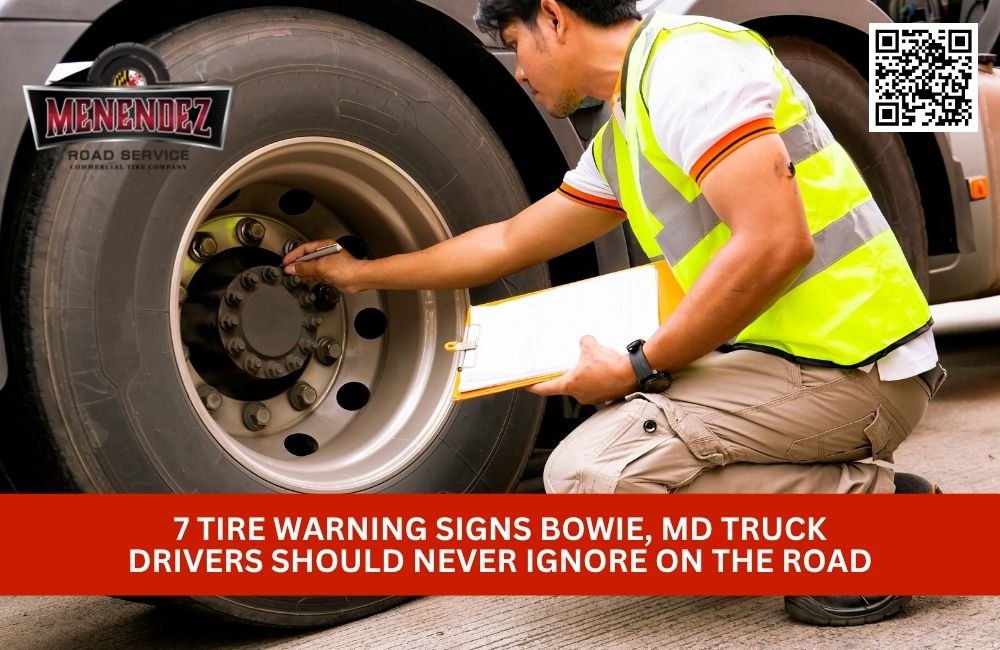
Truck tire trouble rarely starts with a full roadside emergency. Most of the time, it begins with a smaller warning sign that seems easy to push aside during a busy day. A tire feels slightly off. The truck rides rougher than usual. One wheel keeps needing attention. Because the route still looks possible, many drivers keep moving and plan to deal with it later.
That delay is often what turns a manageable problem into a much bigger one. In Bowie, MD, where local routes and delivery schedules can already be tight, ignoring the wrong tire warning can lead to lost time, missed stops, and a stressful need for 𝐓𝐫𝐮𝐜𝐤 𝐑𝐨𝐚𝐝 𝐒𝐞𝐫𝐯𝐢𝐜𝐞. The good news is that many serious tire problems give drivers clear signals before the truck is forced off the road.
This article walks through seven warning signs Bowie, MD truck drivers should never ignore, why each one matters, and how early action can help keep a route from becoming a roadside delay.
Why Tire Warning Signs Matter So Much
Commercial truck tires handle constant pressure from heavy loads, rough road conditions, long miles, and changing temperatures. Because of that, a small issue can grow much faster than many drivers expect.
Small signs often come before bigger failures
A tire does not have to go flat to become dangerous or disruptive. In many cases, the truck is already losing reliability before the tire fully fails. That is why early 𝐓𝐫𝐮𝐜𝐤 𝐑𝐞𝐩𝐚𝐢𝐫 is usually much easier to manage than waiting for an emergency.
Delays affect more than the tire
Once a truck stops unexpectedly, the impact spreads quickly. Delivery windows tighten, dispatch updates become urgent, and the rest of the route starts changing. Catching a warning sign early can save far more than repair time.
Warning Sign 1: Repeated Air Loss
A tire that keeps needing air is one of the clearest warnings a driver can get.
Why it matters
Repeated air loss usually means there is an active problem, such as a puncture, valve issue, rim leak, or internal tire damage. Adding air may keep the truck moving for a little while, but it does not solve what caused the problem.
Why drivers should not ignore it
A tire that starts the day weak is much more likely to create trouble once the truck is loaded and on the road. If the same tire keeps showing pressure problems, it is much smarter to address it before it turns into a search for 𝐑𝐨𝐚𝐝𝐬𝐢𝐝𝐞 𝐓𝐫𝐮𝐜𝐤 𝐑𝐞𝐩𝐚𝐢𝐫 𝐍𝐞𝐚𝐫 𝐌𝐞.
Warning Sign 2: Uneven Tread Wear
Uneven tread wear may not look urgent at first, but it often points to a deeper issue.
What it usually means
If one side of the tire is wearing faster than the other, the cause may be poor alignment, inflation imbalance, suspension trouble, or uneven loading patterns.
Why it becomes a road problem
A truck with uneven tread may still drive, but the tire is already becoming less dependable. That can affect traction, handling, and braking. The longer the tire stays in service without attention, the more likely it is to create a bigger route interruption that needs 𝐓𝐫𝐮𝐜𝐤 𝐑𝐞𝐩𝐚𝐢𝐫.
Warning Sign 3: Sidewall Cracks, Bulges, or Cuts
Visible sidewall damage should never be treated like something that can wait without risk.
What to watch for
Drivers should look for cracks, cuts, bubbles, bulges, or any part of the sidewall that looks irregular or weakened.
Why this is serious
A damaged sidewall often means the structure of the tire is already compromised. Once the truck is carrying weight and building heat, that weak spot can become a major roadside issue very quickly. This is exactly the kind of situation where fast 𝐓𝐫𝐮𝐜𝐤 𝐑𝐨𝐚𝐝 𝐒𝐞𝐫𝐯𝐢𝐜𝐞 𝐍𝐞𝐚𝐫𝐛𝐲 can make a big difference.
Warning Sign 4: New Vibration While Driving
Drivers often feel tire trouble before they can clearly explain it.
Why vibration matters
If the truck starts vibrating more than usual, especially at certain speeds, the tires may already be telling you something is wrong. This could point to uneven wear, internal tire separation, or damage that is getting worse.
Why it should not be ignored
A truck that no longer feels normal is already giving useful information. Waiting for vibration to become “bad enough” can cost much more time later, especially if the issue leads to a full roadside stop and a need for 𝐌𝐨𝐛𝐢𝐥𝐞 𝐓𝐫𝐮𝐜𝐤 𝐑𝐞𝐩𝐚𝐢𝐫.
Warning Sign 5: Pulling or Rough Handling
A truck that suddenly handles differently should always get your attention.
What this can mean
If the truck pulls to one side, feels less stable, or takes more effort to control smoothly, tire condition may already be affecting the way the vehicle drives.
Why this creates route risk
Handling problems slow drivers down even before a full failure happens. They create hesitation, force extra caution, and can make the truck less safe in traffic or under load. In many cases, early 𝐓𝐫𝐮𝐜𝐤 𝐑𝐞𝐩𝐚𝐢𝐫 prevents a much larger problem later in the day.
Warning Sign 6: A Tire That Keeps Drawing Your Attention
Sometimes the warning sign is not dramatic at all. Sometimes it is repeated concern.
Why this matters
If you keep checking the same tire, thinking about the same tire, or wondering whether it will make it through the next stop, that already tells you something. Drivers do not repeatedly worry about tires that feel dependable.
Why it becomes a problem fast
The “one more trip” mindset is often where preventable delays begin. A tire that already feels questionable can quickly become the reason you need 𝐓𝐫𝐮𝐜𝐤 𝐑𝐨𝐚𝐝 𝐒𝐞𝐫𝐯𝐢𝐜𝐞 instead of finishing the route.
Warning Sign 7: Trouble After Hitting Debris or Rough Road
Not every tire problem develops slowly. Some start with one bad impact.
What drivers should notice
If the truck hits a pothole, road debris, broken pavement, or another hard hazard, that is a reason to pay closer attention to the tires as soon as it is safe to do so.
Why this can turn serious later
A tire can take damage and still keep rolling for a while. But the route may be heading toward bigger trouble if the impact caused internal damage, tread separation, or a slow leak. That is why drivers should not assume everything is fine just because the truck did not stop immediately.
What Drivers Should Do When They Notice These Signs
Spotting the warning is important, but responding correctly matters just as much.
Slow down and inspect safely
If possible, move to a safer location without making the issue worse. Turn on hazard lights and do a quick visual check from a safe position.
Look for the clearest clues
Check whether the tire is losing air, showing visible sidewall damage, carrying uneven wear, or creating obvious handling changes.
Do not keep gambling on the route
If the tire issue is active, worsening, or affecting how the truck drives, continuing may only create a bigger delay. In those moments, getting dependable 𝐓𝐫𝐮𝐜𝐤 𝐑𝐨𝐚𝐝 𝐒𝐞𝐫𝐯𝐢𝐜𝐞 𝐍𝐞𝐚𝐫 𝐌𝐞 is usually the smarter call.
Why Mobile Help Matters on Busy Routes
When a tire problem interrupts the day, drivers often need a solution that comes directly to the truck.
It keeps the response more practical
A truck with a serious tire problem is not always in a good position to continue toward a distant 𝐓𝐫𝐮𝐜𝐤 𝐑𝐞𝐩𝐚𝐢𝐫 𝐒𝐡𝐨𝐩. That is why 𝐌𝐨𝐛𝐢𝐥𝐞 𝐓𝐫𝐮𝐜𝐤 𝐑𝐞𝐩𝐚𝐢𝐫 can be such a valuable option.
It helps protect the schedule
The sooner service starts, the better the chance of limiting how much of the route gets disrupted. Fast local help is not only about the tire. It is about protecting the rest of the day.
Practical Habits That Help Drivers Stay Ahead
Make pre-trip checks more intentional
Look for more than just a flat. Check air pressure, tread condition, sidewall condition, and anything that looks different from the previous day.
Recheck during routine stops
Fuel stops and delivery stops are good times for quick visual checks, especially if the truck has already shown warning signs earlier in the day.
Take driver instinct seriously
If the truck feels off, that matters. Drivers often catch tire trouble before it becomes obvious to everyone else.
Keep the right contact ready
The best time to decide who to call is before a roadside problem happens. Having dependable support ready saves time when the route is already under pressure.
Contact Information
Menendez Roadservice LLC – Commercial Truck Tire Service
Address: 8174 Maple Ave, Bowie, MD 20720, United States
Phone: +1 (240) 601-9664
Conclusion
Bowie, MD truck drivers should never ignore warning signs like repeated air loss, uneven tread wear, sidewall damage, new vibration, rough handling, repeated concern about one tire, or trouble after hitting road hazards. These issues often appear before a roadside emergency, and they give drivers a chance to act early while there is still time to stay in control of the day.
The sooner tire problems are taken seriously, the easier it is to avoid bigger downtime and more stressful delays. With dependable 𝐓𝐫𝐮𝐜𝐤 𝐑𝐞𝐩𝐚𝐢𝐫, fast 𝐓𝐫𝐮𝐜𝐤 𝐑𝐨𝐚𝐝 𝐒𝐞𝐫𝐯𝐢𝐜𝐞, and practical 𝐌𝐨𝐛𝐢𝐥𝐞 𝐓𝐫𝐮𝐜𝐤 𝐑𝐞𝐩𝐚𝐢𝐫 when needed, drivers can catch tire trouble early and keep smaller warnings from becoming full roadside emergencies.