
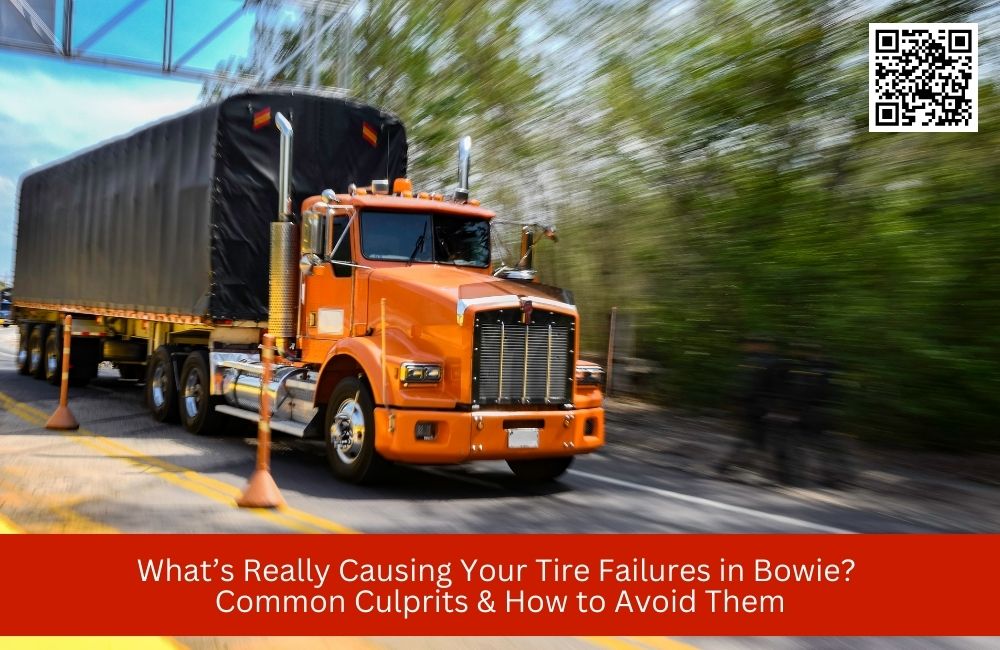
For truckers and fleet owners in Bowie, MD, there are few things more frustrating than dealing with a tire failure, especially when it leads to costly downtime, disrupted schedules, and expensive Truck Repair services. Yet, tire failures are one of the most common breakdowns truckers experience, and surprisingly, many of these failures are preventable with a bit of foresight and proper maintenance.
So, what’s really causing tire failures for truckers in Bowie? What are the hidden factors that lead to blowouts, leaks, and tread separation? In this fact-finding blog, we’ll uncover the common culprits behind tire failures and, more importantly, how you can avoid them by taking proactive steps to maintain your tires. This blog isn’t about promoting any particular Mobile Truck Repair service, it’s about understanding the root causes of tire failures and finding solutions to keep your trucks running smoothly.
The #1 Culprit: Underinflation and Overinflation
One of the most common causes of tire failure is improper tire pressure, either too low or too high. Underinflation puts excess strain on the tire, causes it to overheat, and accelerates wear on the outer edges. Conversely, overinflation causes the tire to wear down in the center and reduces traction, making it more susceptible to punctures and blowouts.
Why It Happens:
- Tire pressure fluctuates with temperature changes. On hot days, tire pressure can drop, leading to underinflation.
- Drivers may fail to check tire pressure regularly or may not have an accurate gauge.
- Overloading the truck or driving at high speeds can also cause pressure issues.
How to Avoid It:
- Check tire pressure regularly—at least once a week, or before long trips.
- Invest in a tire pressure monitoring system (TPMS) to provide real-time data.
- Use a reliable tire pressure gauge to ensure tires are properly inflated, even during seasonal temperature shifts.
By keeping tire pressure within the manufacturer’s recommended range, you can avoid Mobile Truck Repair calls due to overheating or premature wear.
Uneven Wear: Misalignment and Suspension Issues
Uneven tire wear often goes unnoticed until it’s too late. If your tires are wearing more heavily on one side or developing “bald spots,” there’s likely an issue with your alignment, suspension, or both. Misalignment can occur from hitting curbs, potholes, or simply over time due to wear and tear. Worn suspension components can exacerbate the problem, putting uneven pressure on the tires.
Why It Happens:
- Driving over rough terrain, potholes, and curbs can knock a truck out of alignment.
- Worn or damaged suspension parts fail to properly support tire pressure and weight.
- Lack of regular tire rotations and alignment checks can lead to uneven wear.
How to Avoid It:
- Schedule regular alignment checks—at least once a year, or whenever you notice unusual wear or handling issues.
- Check suspension components regularly, especially after heavy use or accidents.
- Rotate your tires every 6,000 to 8,000 miles to ensure even wear.
Proper alignment and suspension maintenance will not only improve tire longevity but also reduce the chances of a breakdown, saving you from expensive Truck Repair costs.
Road Debris: Punctures and Damage
One of the less controllable factors contributing to tire failure is road debris. Whether it’s nails, sharp metal, glass, or rocks, tires are constantly at risk of puncture damage while on the road. These punctures can be slow leaks or lead to a full tire failure if the damage is severe enough.
Why It Happens:
- Road debris, especially on highways and construction zones, is often unavoidable.
- Tires that are improperly inflated or worn are more susceptible to punctures.
How to Avoid It:
- Perform regular tire inspections for visible damage such as punctures, cuts, or embedded debris.
- Install tire shields or use truck designs that protect tires from road hazards, especially on high-traffic routes.
- Be cautious when driving in construction zones where debris is more likely to be present.
Being proactive with tire inspections and addressing minor punctures or damages early can prevent a Mobile Truck Repair service from being needed down the line.
The Age Factor: Rubber Degradation
Every tire has a lifespan, and while you may have a tire with good tread, it could still be at risk if it’s too old. As tires age, the rubber breaks down due to exposure to the elements, UV rays, and general wear. This can cause sidewall cracks, loss of traction, and eventually, blowouts.
Why It Happens:
- Tires naturally degrade over time, even if they aren’t used frequently.
- Exposure to sun, heat, and extreme temperatures accelerates the degradation process.
How to Avoid It:
- Replace tires every 6-10 years, even if the tread still looks good, especially if the tires have been exposed to harsh conditions.
- Store tires properly if they are not being used to prevent damage from UV rays and environmental factors.
- Inspect for cracks and aging signs during regular maintenance checks.
Tires that are too old can cause dangerous breakdowns, leading to costly Truck Repair and even accidents.
Overloading: Putting Excessive Strain on Tires
Overloading your truck puts excessive pressure on your tires and increases the risk of failure. It leads to overheating, increased friction, and, eventually, tire failure. Heavy loads also affect the tire’s contact with the road, causing uneven wear and the potential for blowouts.
Why It Happens:
- Many drivers may not be aware of the weight limits of their vehicles.
- During busy seasons, trucks may be overloaded to maximize deliveries.
How to Avoid It:
- Follow weight guidelines: Make sure your trucks are loaded within their specified weight limits.
- Use load sensors to monitor the distribution of weight.
- Check tire load ratings to ensure they are suitable for the weight being carried.
By preventing overloading and maintaining the correct tire pressure, you can avoid unnecessary strain on your tires, reducing the likelihood of a blowout or breakdown.
The Importance of Regular Tire Maintenance
Tire failures don’t happen without warning. By keeping an eye out for these early signs, you can take action before your tires fail completely. Regular tire maintenance including pressure checks, rotation, alignment, and inspection will significantly extend the lifespan of your tires and reduce the risk of breakdowns. When in doubt, consult a Roadside Truck Repair Near Me or Mobile Truck Repair service for an inspection.
Final Thoughts
While tire failures can be frustrating and costly, the good news is that most of them are preventable with regular care and attention. By staying on top of tire maintenance and recognizing the common causes of tire damage, you can keep your trucks running smoothly and avoid the need for expensive Truck Repair.
Take the time to inspect, maintain, and replace your tires as needed, and your truck will thank you by staying on the road for years to come.
NAP (Name, Address, Phone)
Menendez Roadservice LLC – Commercial Truck Tire Service
Address: Bowie, MD 20720
Phone: +1 (240) 601-9664