
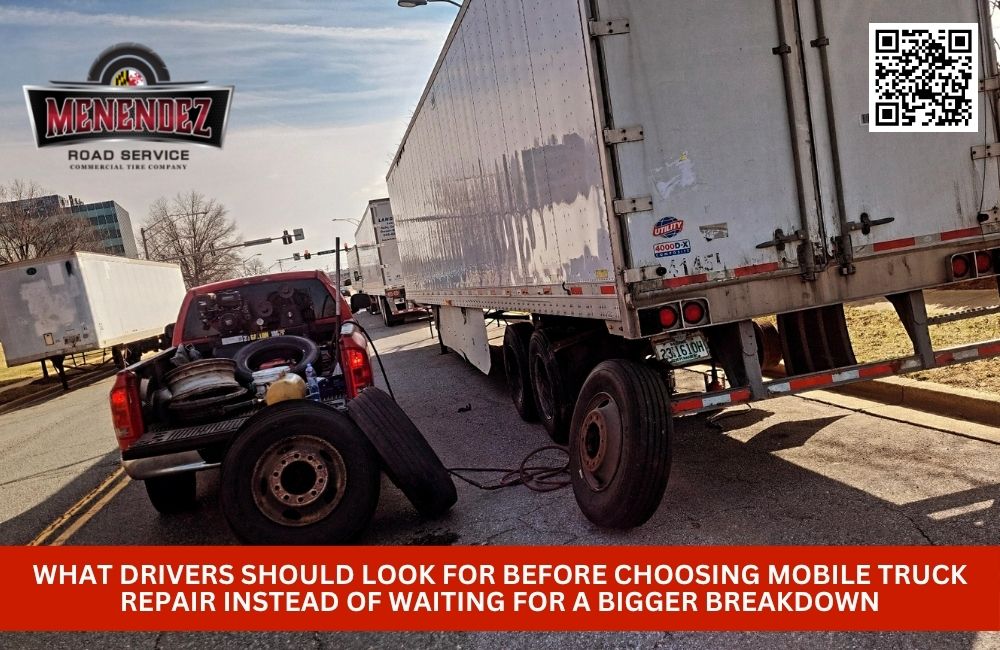
A truck problem rarely feels convenient. It usually shows up when the route is active, the clock is moving, and the next stop already matters. In those moments, many drivers try to push through. If the truck still moves, if the tire still holds for now, or if the issue does not seem severe enough yet, waiting can feel like the easier choice. The problem is that waiting often turns a smaller issue into a much bigger roadside delay.
That is why knowing when to choose 𝗠𝗼𝗯𝗶𝗹𝗲 𝗧𝗿𝘂𝗰𝗸 𝗥𝗲𝗽𝗮𝗶𝗿 matters so much. The right decision at the right time can save hours, reduce stress, protect the route, and keep the day from getting worse than it needs to be. In Bowie, MD, where delivery timing and route pressure often leave little room for avoidable downtime, choosing fast help early is often the smartest move a driver can make.
This article explains what drivers should look for before choosing 𝗠𝗼𝗯𝗶𝗹𝗲 𝗧𝗿𝘂𝗰𝗸 𝗥𝗲𝗽𝗮𝗶𝗿 instead of waiting for a bigger breakdown, why early action matters, and how to spot the signs that the route is already at risk.
Why Waiting Too Long Often Costs More Time
A lot of drivers delay service because they do not want to lose time. That decision makes sense in the moment, but it usually becomes more expensive later.
Small issues rarely stay small under route pressure
A truck that is carrying weight, covering miles, and building heat on the road puts stress on every weak point. A tire that seems manageable while parked can become far less dependable once the route continues.
Delays grow while drivers try to decide
Before a full breakdown happens, drivers often lose time by slowing down, checking the issue repeatedly, and wondering whether the truck can still make the next stop. That hidden delay adds up quickly.
Early 𝗧𝗿𝘂𝗰𝗸 𝗥𝗲𝗽𝗮𝗶𝗿 protects more of the day
A shorter planned stop now is usually much easier to recover from than a longer roadside interruption later. That is why early action is often the real time-saving choice.
The First Thing to Look For: Is the Problem Getting Worse?
One of the clearest clues that a driver should choose 𝗠𝗼𝗯𝗶𝗹𝗲 𝗧𝗿𝘂𝗰𝗸 𝗥𝗲𝗽𝗮𝗶𝗿 is simple: the issue is not staying the same.
Repeated air loss
If a tire keeps needing air, that is no longer a harmless inconvenience. It usually means the issue is active, and it is already moving toward something bigger.
Worse handling than earlier in the day
If the truck feels rougher, pulls more, or vibrates more than it did earlier, the problem is already developing.
More visible wear or damage
If the tire looks worse now than it did at the last stop, that is an important sign. A problem that is clearly moving in the wrong direction should not be given more time than necessary.
Look at Whether the Truck Still Feels Reliable
Drivers often notice the route is in trouble before the tire fully gives out.
Vibration that was not there before
A new vibration can point to a growing tire issue that may become much more serious if the truck keeps moving.
Why this matters
A truck that does not ride normally forces the driver to change how the route is handled. That can mean lower speeds, more caution, more stops, and more lost time.
Rough or unstable handling
If the truck suddenly feels less stable than usual, that should never be ignored.
Why this matters
The route is already being affected. Even if the truck still moves, it may no longer be safe or efficient to keep pushing through.
Repeated concern about the same tire
If the same tire keeps drawing your attention, that matters too.
Why this matters
Drivers do not repeatedly worry about healthy tires. If one tire keeps making you stop, look again, or question the next mile, the route already needs a better answer than waiting.
Look for Visible Signs That the Tire Issue Should Not Wait
Some problems are visible enough that drivers should not be trying to “see if it gets better.”
Sidewall damage
Cuts, cracks, bulges, or bubbles in the sidewall should always be taken seriously.
Why this matters
That kind of visible damage often points to structural weakness. Once the truck is under load, that weakness may get much worse very quickly.
Uneven tread wear
If one side of the tire is wearing faster than the other, the problem is already affecting performance.
Why this matters
Uneven wear often points to deeper issues and can make the truck less dependable throughout the route.
A tire that looks lower than the others
Even before a full flat, a low-looking tire can be a warning that the truck is already heading toward trouble.
Why this matters
A driver who catches this early may avoid needing 𝗥𝗼𝗮𝗱𝘀𝗶𝗱𝗲 𝗧𝗿𝘂𝗰𝗸 𝗥𝗲𝗽𝗮𝗶𝗿 𝗡𝗲𝗮𝗿 𝗠𝗲 under far worse conditions later in the day.
Look at the Route Pressure You Are Already Under
The same tire issue can mean different things depending on how the day is going.
A loaded truck changes the risk
If the truck is carrying weight, any tire problem becomes more serious.
Why this matters
Heat builds faster, weak spots get stressed more, and the margin for error gets smaller.
A tight delivery window changes the cost of waiting
If the route is already close on timing, waiting can turn a manageable delay into a missed stop.
Why this matters
A quick decision to get 𝗧𝗿𝘂𝗰𝗸 𝗥𝗼𝗮𝗱 𝗦𝗲𝗿𝘃𝗶𝗰𝗲 can protect more of the day than waiting until the truck is fully down.
Multiple stops remaining changes the decision
If there is still a lot of route left, a growing tire issue should be taken even more seriously.
Why this matters
What looks small at the beginning of the day often gets bigger before the route is finished.
Look at Whether a Shop Visit Is Actually the Smartest First Move
A lot of drivers think the first goal should be reaching a 𝗧𝗿𝘂𝗰𝗸 𝗥𝗲𝗽𝗮𝗶𝗿 𝗦𝗵𝗼𝗽. Sometimes that makes sense. Sometimes it costs more time and creates more risk.
The truck may not be in a good condition to continue
If the tire is actively losing air, visibly damaged, or affecting how the truck handles, it may not be smart to push farther.
Why this matters
Trying to reach a distant location can make the delay worse and increase the chance of a full roadside problem.
Direct service may be faster than added travel
In many route situations, 𝗠𝗼𝗯𝗶𝗹𝗲 𝗧𝗿𝘂𝗰𝗸 𝗥𝗲𝗽𝗮𝗶𝗿 keeps the solution closer to the problem.
Why this matters
Less extra travel often means less wasted time, less stress, and a better chance of protecting the route.
Look at How Much Time You Could Lose by Waiting
This is often the clearest reason to act sooner instead of later.
Time lost while deciding
A lot of route time disappears before the repair even begins. Drivers may stop, inspect, rethink the route, and wait too long to call.
Why this matters
Once the call is delayed, the repair is delayed, and the route usually falls farther behind than expected.
Time lost if the issue becomes a full breakdown
A small stop now may prevent a much larger delay later.
Why this matters
That is why early 𝗧𝗿𝘂𝗰𝗸 𝗥𝗲𝗽𝗮𝗶𝗿 often saves more time than waiting for a complete failure.
Time lost from route disruption
Once the schedule starts slipping, later stops become harder to protect.
Why this matters
Fast 𝗧𝗿𝘂𝗰𝗸 𝗥𝗼𝗮𝗱 𝗦𝗲𝗿𝘃𝗶𝗰𝗲 𝗡𝗲𝗮𝗿𝗯𝘆 can help keep one problem from spreading across the rest of the route.
What Drivers Should Do Before Making the Call
A few quick checks can help drivers make the right choice faster.
Check your exact location
Know the road name, nearby landmark, exit, or direction of travel.
Why this matters
Clear location details help service teams respond faster and more efficiently.
Check whether the truck is loaded
That affects urgency and helps explain how serious the issue may become.
Why this matters
A loaded truck puts more stress on an already weak tire.
Check what the tire looks and feels like
Notice whether the tire is losing air, showing damage, or changing the way the truck drives.
Why this matters
The more clearly you can describe the issue, the faster the right help can move toward a solution.
Why Fast Local Help Matters in Bowie, MD
Drivers in Bowie, MD often operate on schedules that do not leave much room for unnecessary delay. That is why local support matters so much.
Nearby service usually means quicker response
A closer option for 𝗧𝗿𝘂𝗰𝗸 𝗥𝗼𝗮𝗱 𝗦𝗲𝗿𝘃𝗶𝗰𝗲 𝗡𝗲𝗮𝗿𝗯𝘆 often gives drivers a better chance of recovering the day before the route gets too far behind.
Local support reduces confusion
Drivers can make faster decisions when they already know dependable help is close and practical.
Fast response protects more than the tire
It protects the route, the delivery timing, the driver’s stress level, and the rest of the workday.
Contact Information
Menendez Roadservice LLC – Commercial Truck Tire Service
Address: 8174 Maple Ave, Bowie, MD 20720, United States
Phone: +1 (240) 601-9664
Conclusion
Drivers should choose 𝗠𝗼𝗯𝗶𝗹𝗲 𝗧𝗿𝘂𝗰𝗸 𝗥𝗲𝗽𝗮𝗶𝗿 instead of waiting for a bigger breakdown when the issue is clearly getting worse, the truck no longer feels reliable, visible damage is present, the route is under pressure, or continuing farther may create more risk than recovery. Those are the moments when waiting usually costs more time, not less.
The smartest move is to act while the problem is still manageable. With dependable 𝗧𝗿𝘂𝗰𝗸 𝗥𝗲𝗽𝗮𝗶𝗿, fast 𝗧𝗿𝘂𝗰𝗸 𝗥𝗼𝗮𝗱 𝗦𝗲𝗿𝘃𝗶𝗰𝗲, and practical 𝗧𝗿𝘂𝗰𝗸 𝗥𝗼𝗮𝗱 𝗦𝗲𝗿𝘃𝗶𝗰𝗲 𝗡𝗲𝗮𝗿𝗯𝘆 when needed, drivers in Bowie, MD can keep smaller problems from turning into much bigger route disruptions.