
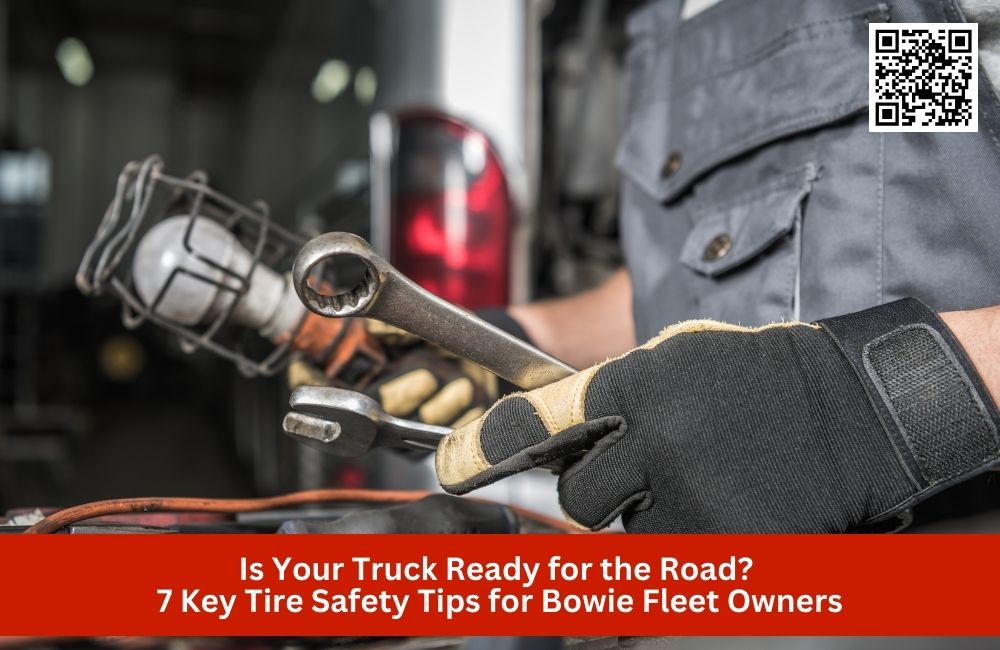
As a fleet owner in Bowie, MD, ensuring that your trucks are roadworthy and performing at their best is a priority. While many drivers focus on the engine or brakes, tire safety is just as important. The tires are the only point of contact between your truck and the road, which means they play a critical role in fuel efficiency, vehicle handling, and safety.
Proper tire maintenance can help prevent costly breakdowns, improve fuel efficiency, and reduce the risk of accidents. Tire-related issues, such as blowouts, punctures, or uneven wear, can cause sudden delays, forcing you to call for Roadside Truck Repair Near Me or need emergency Truck Repair services. In this blog, we will go over seven key tire safety tips that all Bowie fleet owners should follow to keep their trucks running smoothly and safely on the road.
1. Check Tire Pressure Regularly
One of the simplest yet most important aspects of tire maintenance is proper tire pressure. Tires that are under-inflated or over-inflated don’t perform at their optimal level. Under-inflated tires cause more friction, resulting in quicker wear, poor fuel efficiency, and a higher risk of a blowout. Over-inflated tires, on the other hand, cause the tread to wear out more quickly in the center.
What to look for:
- Fluctuating fuel efficiency or poor performance.
- Tires that need frequent inflation.
- Tread wear that’s more concentrated in the center or edges.
Why it matters:
- Under-inflated tires increase rolling resistance, lowering fuel efficiency.
- Proper tire pressure ensures even wear and optimizes the truck’s handling and performance.
What you can do:
- Check tire pressure weekly and before long trips.
- Invest in a Tire Pressure Monitoring System (TPMS) for real-time pressure alerts.
2. Regularly Inspect for Tire Damage
Your tires are exposed to all kinds of road hazards like debris, potholes, and even curbs. Small damages such as cuts, punctures, or bulges can escalate into major issues if not caught early. Regular tire inspections allow you to spot minor damage before it becomes a big problem.
What to look for:
- Cracks, cuts, or punctures on the tread or sidewall.
- Bulges or blisters that suggest internal damage.
- Uneven tread wear, which can signal alignment issues.
Why it matters:
- Tire damage can lead to blowouts or slow leaks, causing you to need Mobile Truck Repair or Truck Road Service when least expected.
- Visible damage weakens the tire’s structural integrity, increasing the likelihood of failure.
What you can do:
- Inspect your tires regularly, especially after driving on rough roads or through construction zones.
- Replace damaged tires immediately to prevent further issues.
3. Rotate Your Tires Regularly
Regular tire rotations are essential for ensuring even wear and maximizing tire life. Over time, tires will naturally wear unevenly, particularly if you’re driving a heavily loaded truck. If you don’t rotate your tires regularly, the wear on certain tires will accelerate, leading to premature replacement.
What to look for:
- Uneven wear, especially on the front tires, which tend to wear out faster.
- Vibrations or pulling while driving, indicating misalignment.
Why it matters:
- Uneven tire wear can cause your tires to wear out faster, resulting in more frequent replacements.
- Regular rotations improve fuel efficiency and maintain optimal handling.
What you can do:
- Rotate your tires every 6,000 to 8,000 miles or as recommended by the manufacturer.
- Have your alignment checked to prevent uneven wear from suspension issues.
4. Ensure Proper Tire Alignment
Tire misalignment is a common problem that can lead to uneven tire wear, decreased fuel efficiency, and poor handling. Misalignment puts additional stress on certain tires, leading to faster wear and reduced performance. Keeping your truck properly aligned ensures your tires make even contact with the road.
What to look for:
- Pulling to one side while driving straight.
- Vibrations or steering issues that signal misalignment.
Why it matters:
- Misalignment increases rolling resistance, reducing fuel efficiency and causing uneven tire wear.
- Proper alignment ensures smoother driving, better handling, and longer tire life.
What you can do:
- Have your alignment checked regularly, especially if you notice your truck pulling to one side or if your tires show signs of uneven wear.
- Address alignment issues promptly to prevent excessive wear and improve handling.
5. Monitor Tire Tread Depth
The tread on your tires is essential for traction, especially when driving on wet or slippery roads. Shallow tread reduces grip, leading to a higher chance of hydroplaning and reduced braking efficiency. Regularly checking your tire’s tread depth ensures your tires are ready for any driving conditions.
What to look for:
- Worn-out tread that is below the 2/32 inch limit.
- Uneven wear that could indicate misalignment or improper tire pressure.
Why it matters:
- Shallow tread depth increases the risk of losing traction, particularly in wet or icy conditions.
- Proper tread depth ensures your tires grip the road, improving safety and handling.
What you can do:
- Use a tread depth gauge to measure the tread regularly.
- Replace tires once the tread depth falls below the legal minimum of 2/32 inch.
- Check for uneven tread wear and address underlying issues such as alignment or suspension problems.
6. Keep an Eye on Tire Age
Even if your tires seem fine, tire age is an important factor in their overall health. Rubber degrades over time, regardless of tread depth or usage. Tires that are more than 6 years old should be replaced, even if they appear to be in good condition.
What to look for:
- Cracks, bulges, or brittle sidewalls, which are signs of aging.
- Tires that have been in service for more than 6 years.
Why it matters:
- Old tires lose their elasticity and become more prone to failure, even if the tread still looks good.
- Degraded rubber is more susceptible to road hazards, making your truck more vulnerable to blowouts.
What you can do:
- Replace tires older than 6 years, even if the tread appears to be fine.
- Keep track of tire age by checking the DOT code on the tire’s sidewall.
7. Replace Tires When Necessary
Tires don’t last forever, and there comes a time when you need to replace them. It’s crucial to replace tires at the right time to ensure safety and performance. Worn-out tires reduce traction, increase fuel consumption, and are more prone to failure.
What to look for:
- Bald spots or worn-out tread.
- Visible damage, such as sidewall cracks or bulges.
- Frequent tire failures or the need for constant Truck Road Service.
Why it matters:
- Old or worn tires can compromise safety and performance.
- New tires improve fuel efficiency, safety, and driving performance.
What you can do:
- Replace tires as needed, based on tread wear and visible damage.
- Stay on top of your tire inspections and replacement schedules to prevent unsafe conditions.
Conclusion: Keep Your Tires in Top Shape for a Smooth Ride
Ensuring that your truck is ready for the road starts with maintaining your tires. Bowie truckers can keep their vehicles running smoothly by performing regular tire inspections, keeping an eye on tire pressure, and addressing tire damage promptly. By staying proactive with tire maintenance, you’ll not only extend the life of your tires but also improve fuel efficiency and reduce the likelihood of costly breakdowns that require Truck Repair or Roadside Truck Repair Near Me.
Proper tire care is a small investment that pays off in long-term savings, safety, and reliability.
Contact Details
Menendez Roadservice LLC – Commercial Truck Tire Service in Bowie, MD
Address: Bowie, MD 20720
Phone: +1 (240) 601-9664