
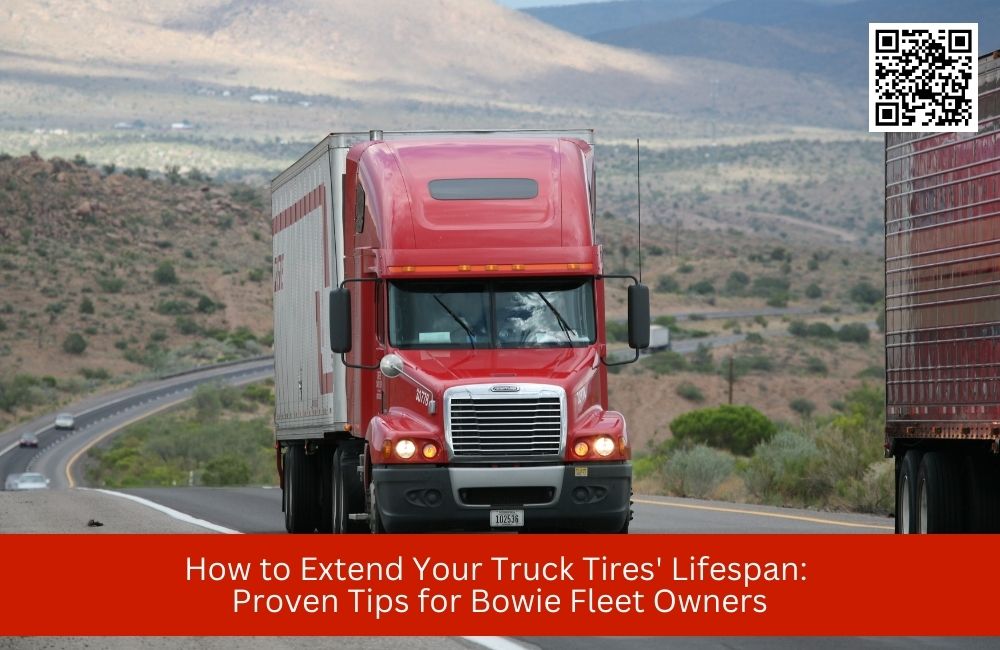
For Bowie fleet owners, keeping your trucks on the road for as long as possible is essential for business success. One of the most significant contributors to your vehicle’s overall cost of ownership is the condition of its tires. Tires can be expensive to replace, and when they fail prematurely, they can lead to costly Truck Road Service, downtime, and delays.
In this fact-finding blog, we’ll provide actionable tips to help Bowie fleet owners extend the lifespan of their truck tires. By following these proven strategies, you can avoid unexpected breakdowns, reduce maintenance costs, and keep your trucks in excellent condition for longer.
We’ll also discuss common tire issues and how timely inspections and maintenance can help you avoid them ultimately reducing the need for Mobile Truck Repair or visits to the Truck Repair Shop.
Why Tire Maintenance Matters for Fleet Owners
As a fleet owner, managing the wear and tear on your vehicles is an ongoing challenge. Tires are one of the most critical components of your fleet, yet they are often neglected until problems arise. Regular tire maintenance can significantly extend the lifespan of your tires, reduce the frequency of Truck Repair visits, and improve your fleet’s overall efficiency.
A truck’s tire lifespan is impacted by several factors, including driving habits, load weight, road conditions, and tire care. Understanding how these factors affect your tires can help you develop a proactive maintenance strategy that minimizes wear and tear.
1. Maintain Proper Tire Pressure
The most significant factor in tire longevity is maintaining proper tire pressure. Underinflated tires can lead to excessive heat buildup, which can cause the tire to break down faster and increase the risk of a blowout. On the other hand, overinflated tires can wear out prematurely in the center of the tread.
How to Keep Tires Properly Inflated:
- Check tire pressure regularly: At least once a week and before long hauls.
- Use a reliable tire pressure gauge: Make sure the tire pressure matches the manufacturer’s recommended levels.
- Invest in a Tire Pressure Monitoring System (TPMS): This real-time monitoring system alerts you to tire pressure changes, helping you prevent underinflation.
By ensuring that your tires are properly inflated, you prevent the risk of premature wear, save on fuel costs, and improve safety.
2. Rotate Tires Regularly
Tires on different axles of your truck wear at different rates. The front tires, for example, experience more wear due to steering, while the rear tires take more of the load. If you don’t rotate your tires, some tires will wear down faster, reducing their lifespan.
How to Rotate Tires Properly:
- Schedule tire rotations: Every 6,000–8,000 miles, or at every oil change, to ensure even wear.
- Monitor wear patterns: Check for signs of uneven wear before rotating and adjust your maintenance plan if necessary.
- Follow your truck manufacturer’s recommendation: Some trucks may require specific rotation patterns.
Regular tire rotations ensure even wear across all tires and help maximize tire lifespan.
3. Perform Regular Alignment Checks
Proper wheel alignment is crucial for extending tire life. If your truck’s alignment is off, it will cause uneven wear, particularly on the inner or outer edges of the tire. Misalignment is often caused by hitting potholes, curbs, or simply driving with poor suspension.
How to Keep Your Tires Aligned:
- Schedule alignment checks: Have your truck’s alignment inspected at least once a year, or more frequently if you notice unusual tire wear or pulling to one side.
- Monitor handling: If your truck pulls to one side or feels unsteady, this may indicate a misalignment that’s causing uneven tire wear.
An alignment check ensures that all your tires wear evenly, preventing premature replacement and reducing the risk of needing costly Truck Repair services.
4. Balance Your Tires
An unbalanced tire can lead to excessive vibration, causing uneven wear and potentially damaging your truck’s suspension system. When a tire isn’t balanced, it can cause the truck to vibrate, which accelerates tread wear and puts additional stress on the truck’s chassis and steering components.
How to Balance Your Tires:
- Get your tires balanced regularly: During routine maintenance or when new tires are installed.
- Monitor vibrations: If you notice excessive shaking or vibration while driving, it’s a sign that your tires may need balancing.
Balancing your tires is a relatively easy and inexpensive way to prolong their lifespan and ensure a smooth, safe ride.
5. Avoid Overloading Your Truck
Overloading your truck puts undue pressure on your tires, leading to faster wear and tear. If the weight is unevenly distributed, it can also cause alignment problems and result in further damage. Many fleet owners may not realize how much additional strain overloading places on the tires.
How to Prevent Overloading:
- Adhere to weight limits: Always follow the manufacturer’s recommended weight limits for your truck.
- Distribute weight evenly: Make sure the load is balanced across the axles to avoid excessive strain on one set of tires.
- Use a scale: Consider using a weight scale to ensure that the truck isn’t overloaded.
Avoiding overloading helps protect your tires, improves fuel efficiency, and ensures that your truck stays within safe operating limits.
6. Inspect Tires for Damage Regularly
Frequent tire inspections are one of the best ways to prevent Mobile Truck Repair services from becoming necessary. A visual inspection will reveal early signs of damage, such as cuts, punctures, cracks, or bulges. Catching these issues early can help you avoid larger problems, such as blowouts or tire failure.
How to Inspect Tires:
- Check for visible damage: Look for cuts, cracks, or bulges in the sidewall and tread.
- Examine tire tread: Ensure that the tread depth is adequate and that the wear is even across all tires.
- Look for punctures: Inspect the tires for nails, rocks, or other debris embedded in the tread.
Regular tire inspections help ensure that small issues are addressed before they become major problems, saving you time and money in the long run.
7. Replace Tires When Necessary
Even with regular maintenance, all tires have a lifespan, and eventually, they need to be replaced. Worn-out tires are less effective in wet conditions, cause poor fuel efficiency, and pose a significant safety risk. Regularly replacing tires that have reached the end of their lifespan is essential to fleet safety and performance.
How to Know When to Replace Tires:
- Tread depth: If your tire tread is less than 2/32 of an inch, it’s time to replace it.
- Visible damage: Bulges, cracks, or sidewall damage are clear signs that the tire needs to be replaced.
- Age of the tire: Even if a tire looks fine, tires older than 6-10 years may need to be replaced due to natural wear and rubber degradation.
Regularly replacing worn-out tires reduces the risk of accidents and improves fuel efficiency, ultimately saving on long-term Truck Repair costs.
Conclusion: How Regular Tire Maintenance Helps Extend Tire Lifespan
By implementing these tire maintenance practices, Bowie fleet owners can significantly extend the lifespan of their tires, reduce the risk of costly breakdowns, and avoid the need for frequent Truck Repair. Whether it’s maintaining tire pressure, rotating tires, or performing regular alignment checks, these simple steps help keep your trucks running smoothly and efficiently.
Proactive tire maintenance is one of the easiest and most effective ways to minimize downtime, improve safety, and save on long-term Truck Repair Shop costs. By following these proven tips, you can ensure that your fleet stays on the road longer and experiences fewer issues with tire wear and tear.
NAP (Name, Address, Phone)
Menendez Roadservice LLC – Commercial Truck Tire Service
Address: Bowie, MD 20720
Phone: +1 (240) 601-9664