
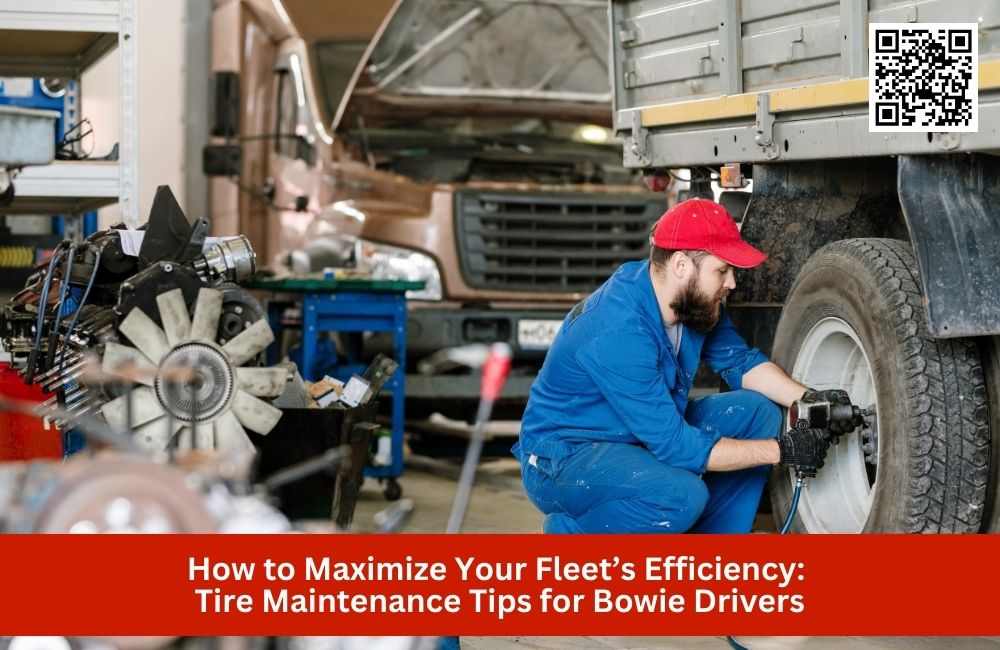
As a fleet manager or trucker in Bowie, MD, ensuring that your trucks are running efficiently is key to both your business’s bottom line and your team’s safety. A major contributor to vehicle performance and fuel efficiency is often overlooked: tire maintenance. Tires are the only part of your vehicle in direct contact with the road, and the condition of those tires can have a direct impact on fuel costs, vehicle handling, and downtime.
In this blog, we’ll explore how tire maintenance can maximize your fleet’s efficiency and save you time, money, and frustration. By implementing these best practices, you can improve safety, increase tire lifespan, reduce fuel consumption, and minimize the risk of needing emergency truck repair. This proactive approach will not only help you avoid costly breakdowns but also extend the overall life of your tires and trucks.
Why Tire Maintenance is Critical for Fleet Efficiency
When tires are maintained correctly, they play a crucial role in optimizing vehicle performance. Improperly maintained tires can lead to:
- Increased fuel consumption due to poor tire inflation and alignment.
- Shorter tire life, causing the need for frequent replacements.
- Higher risk of blowouts or tire failure, leading to costly repairs and unplanned downtime.
- Decreased safety, which affects the reliability of your fleet on the road.
In contrast, maintaining your tires through regular inspections and care helps maintain optimal tire pressure, ensure even wear, and improve fuel efficiency leading to cost savings and reducing the likelihood of needing Truck Road Service or Roadside Truck Repair Near Me.
1. Keep Tires Properly Inflated to Maximize Efficiency
One of the simplest ways to improve fleet efficiency is by maintaining correct tire pressure. Tires that are under-inflated create more friction, leading to faster wear and reduced fuel economy. Over-inflated tires can wear unevenly and become more susceptible to road damage.
What to Look For:
- Frequent tire pressure loss, especially if tires need to be inflated regularly.
- Inconsistent fuel efficiency, which may point to improper tire inflation.
- Uneven tire wear, especially on the edges, which could indicate low pressure.
Why It Matters:
- Under-inflated tires can reduce fuel efficiency by up to 3% per tire.
- Properly inflated tires improve the vehicle’s gas mileage and tire lifespan, reducing overall costs.
What You Can Do:
- Check tire pressure weekly or before long trips.
- Use a reliable tire pressure gauge to ensure your tires are at the correct pressure as per manufacturer recommendations.
- Invest in a Tire Pressure Monitoring System (TPMS) to get real-time tire pressure readings and avoid issues on the road.
2. Regular Tire Rotations and Alignments
To ensure tires wear evenly and last longer, regular tire rotations are essential. Rotating your tires ensures that no tire bears too much weight or wear, especially in fleet vehicles that often carry heavy loads. Additionally, a proper alignment ensures that all tires make even contact with the road, which helps prevent uneven tire wear.
What to Look For:
- Uneven wear patterns across your tire tread.
- Vibration or pulling to one side, which could indicate misalignment.
- Handling issues, such as difficulty steering or reduced stability.
Why It Matters:
- Uneven tire wear leads to tires wearing out prematurely, resulting in more frequent replacements and additional Truck Repair Shop visits.
- Proper alignment improves fuel efficiency and ensures the vehicle handles properly.
What You Can Do:
- Rotate your tires every 6,000-8,000 miles, or as recommended by the manufacturer.
- Have your alignment checked regularly, especially if you notice your truck pulling to one side.
- Balance your tires periodically to ensure proper wear and performance.
3. Inspect Tires for Damage Regularly
Tires naturally encounter road debris, rocks, curbs, and potholes that can cause damage. Regular tire inspections will help you catch potential damage early, before it leads to a serious problem that might require Roadside Truck Repair Near Me.
What to Look For:
- Cuts, punctures, or debris embedded in the tire tread.
- Cracks, bulges, or other visible damage to the tire sidewalls.
- Uneven wear, especially if it’s concentrated on one side.
Why It Matters:
- Sidewall damage can compromise the structural integrity of the tire, leading to blowouts or sudden failures.
- Minor punctures can develop into slow leaks, causing tire pressure loss over time.
What You Can Do:
- Inspect your tires weekly for damage and debris, especially after driving on rough roads or construction zones.
- Replace damaged tires immediately to avoid safety risks and prevent unnecessary damage.
- Ensure that any embedded objects are removed promptly to prevent slow leaks.
4. Avoid Overloading Your Truck
It’s tempting to push your trucks to their limits by carrying heavy loads, but overloading can drastically shorten tire lifespan and negatively impact safety. When tires are overloaded, they experience increased pressure, heat buildup, and excessive wear. This can lead to more frequent Truck Road Service visits and early tire replacements.
What to Look For:
- Excessive tire wear in specific areas, particularly on tires that carry more weight.
- Handling issues, such as instability or difficulty steering when carrying heavy loads.
Why It Matters:
- Overloading can lead to premature tire wear and increase the likelihood of blowouts.
- The additional weight increases fuel consumption and reduces overall vehicle efficiency.
What You Can Do:
- Know your truck’s load capacity and ensure that you’re not exceeding it.
- Use load scales to verify that your truck is properly balanced and not carrying too much weight.
- Distribute the weight evenly across all tires to reduce stress on any single tire.
5. Replace Tires at the Right Time
No matter how well you maintain your tires, they will eventually wear out and need to be replaced. Tires that have become too worn, too old, or damaged beyond repair should be replaced to maintain safety and efficiency. Keeping tires beyond their useful life can lead to performance issues, safety hazards, and more frequent Truck Repair needs.
What to Look For:
- Worn tread depth of less than 2/32 of an inch.
- Visible cracks, cuts, or sidewall damage.
- Tires that are older than 6 years, even if they appear in decent condition.
Why It Matters:
- Old or worn tires compromise vehicle performance, especially in wet or icy conditions, and increase the risk of blowouts.
- Replacing tires on time helps prevent accidents and ensures optimal vehicle handling.
What You Can Do:
- Replace tires when tread depth falls below 2/32 of an inch.
- Track the age of your tires, and replace those older than 6 years.
- Inspect tires regularly and replace any that show signs of significant wear or damage.
Conclusion: Keep Your Fleet Running Smoothly with Proper Tire Maintenance
Maximizing your fleet’s efficiency starts with taking good care of your tires. By maintaining proper tire pressure, rotating tires regularly, inspecting for damage, and replacing tires promptly, you can reduce the risk of blowouts, extend tire life, and enhance vehicle safety. These simple practices will not only keep your Bowie fleet running at its best but also save you money in the long term by preventing expensive Truck Repair and Truck Road Service calls.
If you stay on top of your tire maintenance, you’ll be able to extend the lifespan of your tires, reduce your fuel costs, and ensure your trucks remain roadworthy for the long haul.
Contact Details
Menendez Roadservice LLC – Commercial Truck Tire Service in Bowie, MD
Address: Bowie, MD 20720
Phone: +1 (240) 601-9664