
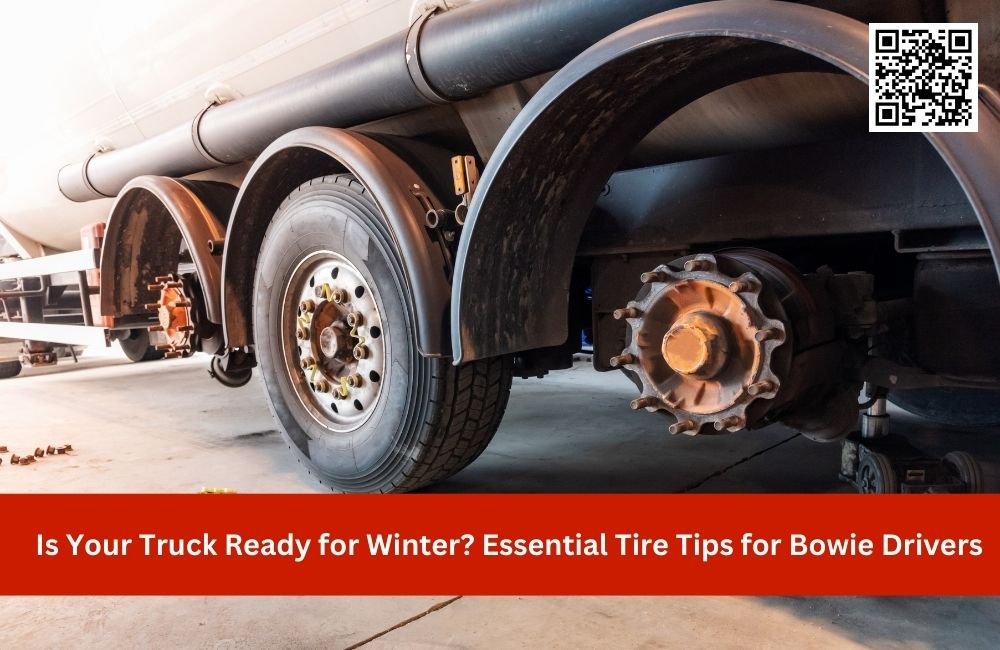
Winter weather can be tough on your truck, especially its tires. Cold temperatures, ice, snow, and slush all present unique challenges for Bowie drivers during the winter months. Whether you’re navigating the streets of Bowie, MD, or heading out on a longer trip, it’s crucial to ensure that your truck’s tires are in optimal condition to handle these harsh conditions. Tires are the first line of defense against winter’s slippery roads, and if they’re not properly maintained, you may find yourself needing Roadside Truck Repair Near Me or emergency Truck Road Service at the most inconvenient times.
In this fact-finding blog, we’ll cover essential tire tips to help you get your truck winter-ready. From tire pressure to tread depth, these tips will help you stay safe, avoid breakdowns, and reduce the need for costly Truck Repair and Truck Repair Shop visits.
Why Winter Tires Are a Must for Bowie Drivers
During the winter months, it’s not enough to just have tires that look good; they need to perform in tough conditions. The cold temperatures alone can cause tire pressure to drop, and when combined with icy roads and snow, your tires need to be up for the challenge.
Why is winter tire maintenance crucial?
- Temperature drop affects tire pressure: When the temperature drops, so does your tire pressure. A sudden decrease in temperature can cause the air inside your tires to contract, leading to under-inflated tires, which in turn can lead to uneven wear, reduced fuel efficiency, and a higher risk of a tire blowout.
- Winter roads are more hazardous: Snow, slush, and ice create slick conditions that can drastically reduce traction. Tires designed for cold weather and icy conditions are essential to ensure your truck handles well and maintains grip on the road.
What you can do:
- Switch to winter tires: If you frequently drive in cold or snowy conditions, switching to winter tires is a smart investment. These tires are designed with deeper treads and softer compounds that provide better traction in winter conditions.
- Inspect your tires before winter: Ensure that your current tires are still in good condition to handle winter weather. Check for cracks, bulges, or uneven wear patterns that might suggest the tires are no longer reliable.
1. Check Tire Pressure Regularly
Tire pressure is always important, but it becomes especially critical during winter. Cold weather causes tire pressure to drop, which leads to under-inflation. Under-inflated tires cause the rubber to make more contact with the road, which increases wear and generates excessive heat. This can lead to blowouts or decreased handling.
Why it matters:
- Under-inflation increases tire wear: Under-inflated tires wear faster and are more likely to suffer damage.
- Poor handling and safety issues: Low tire pressure compromises handling, which can make driving in winter conditions even more dangerous.
What you can do:
- Check tire pressure weekly during the winter months, even when the temperatures drop. Use a reliable tire pressure gauge and ensure that each tire is inflated to the manufacturer’s recommended PSI.
- Invest in a TPMS (Tire Pressure Monitoring System): If your truck isn’t already equipped with one, consider installing a TPMS. This system will alert you when your tire pressure is too low, helping you prevent damage.
2. Ensure Your Tires Have Adequate Tread Depth
Tread depth is one of the most important factors in ensuring that your truck can safely navigate Bowie’s winter roads. As tires wear down, they lose their ability to grip the road, particularly when the surface is wet, icy, or snowy.
What to look for:
- Check tread depth: Most tires come with tread wear indicators that show when the tread has worn down to an unsafe level. The minimum tread depth for tires should be 2/32 of an inch, but many experts recommend replacing tires when the tread wears down to 4/32 of an inch for optimal winter performance.
- Signs of worn tires: If your tires have visible damage, bulges, or flat spots, it may be time for new ones. This is particularly important during the winter months when tread is essential for traction.
What you can do:
- Use a tread depth gauge to check the depth of your tire tread. If it’s below 4/32 of an inch, it’s time to replace your tires.
- Invest in tires with deep, aggressive treads for better grip in snow and ice.
3. Rotate Tires Regularly
Tire rotation ensures that all four tires wear evenly. This is particularly important during the winter months when some tires may bear more weight due to load distribution or rough road conditions. Uneven tire wear leads to premature tire failure, reduced performance, and a greater need for Truck Repair.
Why it matters:
- Even tire wear: Regular rotation helps ensure that all tires wear evenly, which extends the life of your tires and improves performance.
- Improved handling and fuel efficiency: Unevenly worn tires can reduce your truck’s ability to grip the road and reduce fuel efficiency.
What you can do:
- Rotate tires every 6,000 to 8,000 miles as part of your regular maintenance schedule.
- Check for unusual wear patterns: If you notice any tire wearing more quickly than others, get it checked for alignment or suspension issues.
4. Check for Sidewall Damage
The sidewalls of your tires are vulnerable to damage from curbs, potholes, and debris, particularly in winter when the roads are rougher. Sidewall damage can lead to tire failure, particularly if the tire is already under pressure or under-inflated.
What to look for:
- Cracks or bulges on the sidewall.
- Scuff marks from curbs or rough roads.
Why it matters:
- Sidewall damage can lead to blowouts: A sidewall blowout can happen suddenly, leaving you stranded on the side of the road in dangerous winter conditions.
- Increased risk of sudden failure: Damaged sidewalls are more vulnerable to sudden tire failure, especially under the stress of harsh winter conditions.
What you can do:
- Inspect your tire sidewalls regularly for any cracks, bulges, or scuffing.
- Replace tires with visible sidewall damage immediately to avoid the risk of a blowout.
5. Monitor for Vibration or Noise
A change in the way your truck handles is often a sign that something is wrong with your tires. Vibration or unusual noise can indicate that your tires are unbalanced, misaligned, or have developed internal damage.
What to listen for:
- Vibrations or shaking while driving, especially at higher speeds.
- Noise or a thumping sound that increases with speed.
Why it matters:
- Unbalanced tires can cause uneven wear, poor handling, and unnecessary strain on your suspension system.
- Internal damage such as broken belts or tread separation can lead to tire failure if left unchecked.
What you can do:
- Get your tires balanced regularly, particularly if you notice vibration or noise.
- Address handling issues promptly by getting your truck inspected for misalignment, tire balance, or suspension issues.
Conclusion: Get Your Truck Winter-Ready
Ensuring your truck’s tires are ready for winter conditions isn’t just about replacing old tires—it’s about consistent maintenance. By monitoring tire pressure, inspecting tread depth, rotating your tires regularly, checking for sidewall damage, and paying attention to vibrations or noise, you can significantly extend the lifespan of your tires and reduce the risk of breakdowns during harsh winter months.
Bowie truckers who follow these tire tips will be better equipped to navigate icy roads, avoid emergency Mobile Truck Repair situations, and keep their vehicles in optimal condition all year long.
Contact Details
Menendez Roadservice LLC – Commercial Truck Tire Service in Bowie, MD
Address: Bowie, MD 20720
Phone: +1 (240) 601-9664